
Clarifying User Trust For An AI-Powered Startup
Role
UX Designer
Skills
Design Thinking, Concept Creation, Journey Mapping,
Strategic Thinking, Prototyping, User Research
Duration
3 Month Contract
Team
Product, Marketing, Engineering
SUMMARY
Context.ai is an AI-Powered Office Suite, and users were cancelling after payment without explanation. During my 3 month contract, I discovered they were abandoning the product after losing work with no way to recover it. By the time they reached cancellation, trust was already broken. I redesigned the cancellation flow to surface user intent earlier and created a recovery framework to help users maintain trust even when the product failed.
PROBLEM
Why Do Users Keep Cancelling Their Subscription?
PROCESS
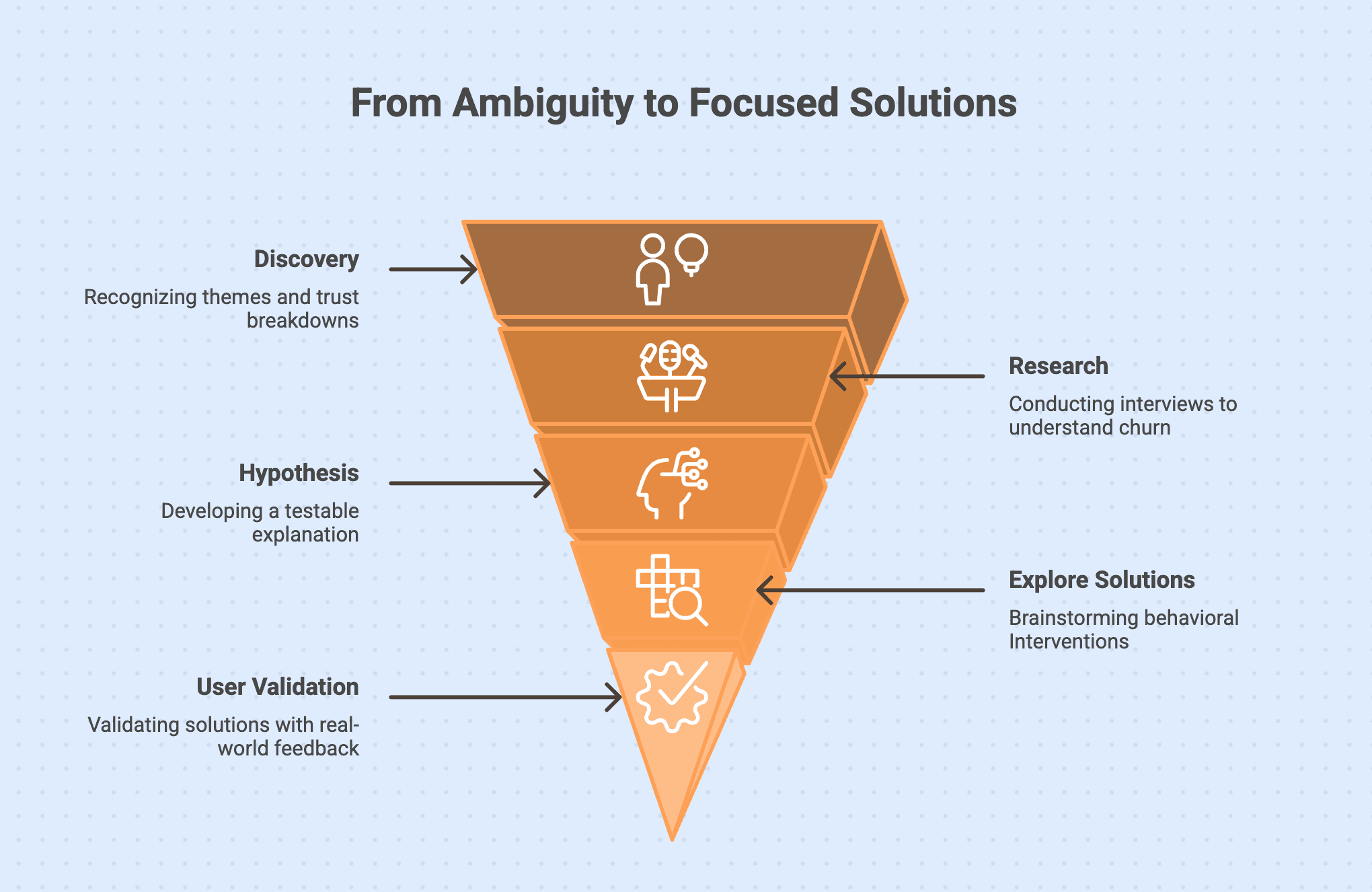

Research
Users Tolerated Friction Until They Lost Work, Then They Left.
10 user interviews revealed users stayed silent until failure forced them to leave. Only after something broke — lost work, unreliable output, or confusion with no recovery — did they articulate frustration. Power users described problems nearly identical to those raised by churned users, suggesting churn was not an isolated edge case but a late-stage signal.
"I keep wasting my credits trying to correct something specific in the presentation deck I made." - Churned User

Affinty Map for Power Users
Common Pain Points
Hypothesis
If users are given transparent choices at cancellation, and meaningful recovery options when things go wrong, they are more likely to trust the product.
Method
Redesigning The Cancellation Flow
Myself, the Director of Marketing and the Head of Engineering put or heads together to implement a clearer cancellation experience. I mapped the cancellation journey then explored solutions through low-fidelity wireframes.
Before: One-Click Cancel Flow
The existing cancellation experience before I came in was minimal: users went to their profile, navigated to settings, clicked "Cancel Subscription," and that was it. No feedback collection, no alternatives presented, and no insight into why users were leaving. The company had zero visibility into churn drivers.

After: Transparent Exit With Recovery Options
Low Fidelity Wireframes

High Fidelity Wireframes
BUT! Churn Did Not Significantly Decrease.
The cancellation flow solidified the real problem: users were leaving because they kept losing their work
SOLUTION
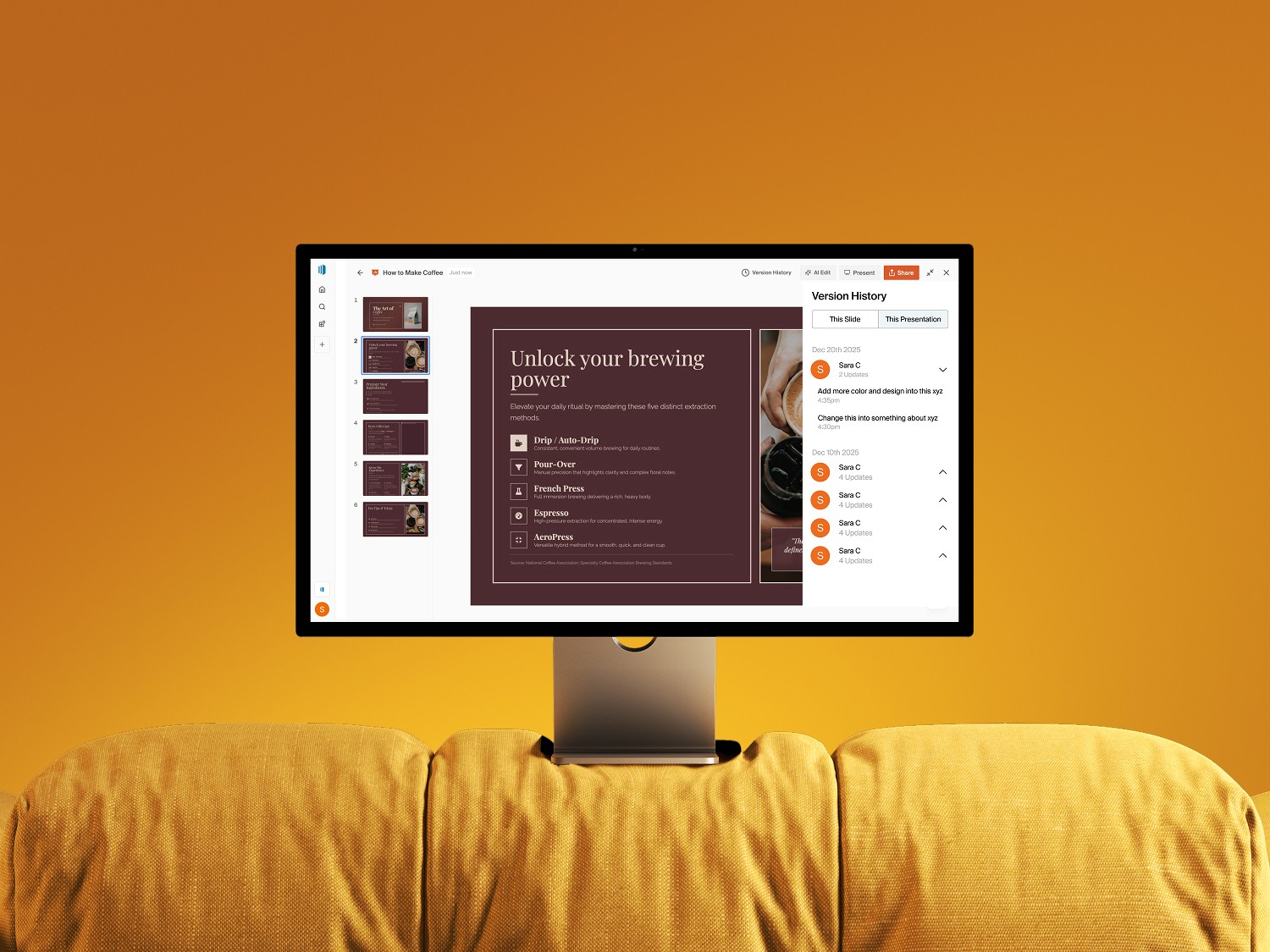
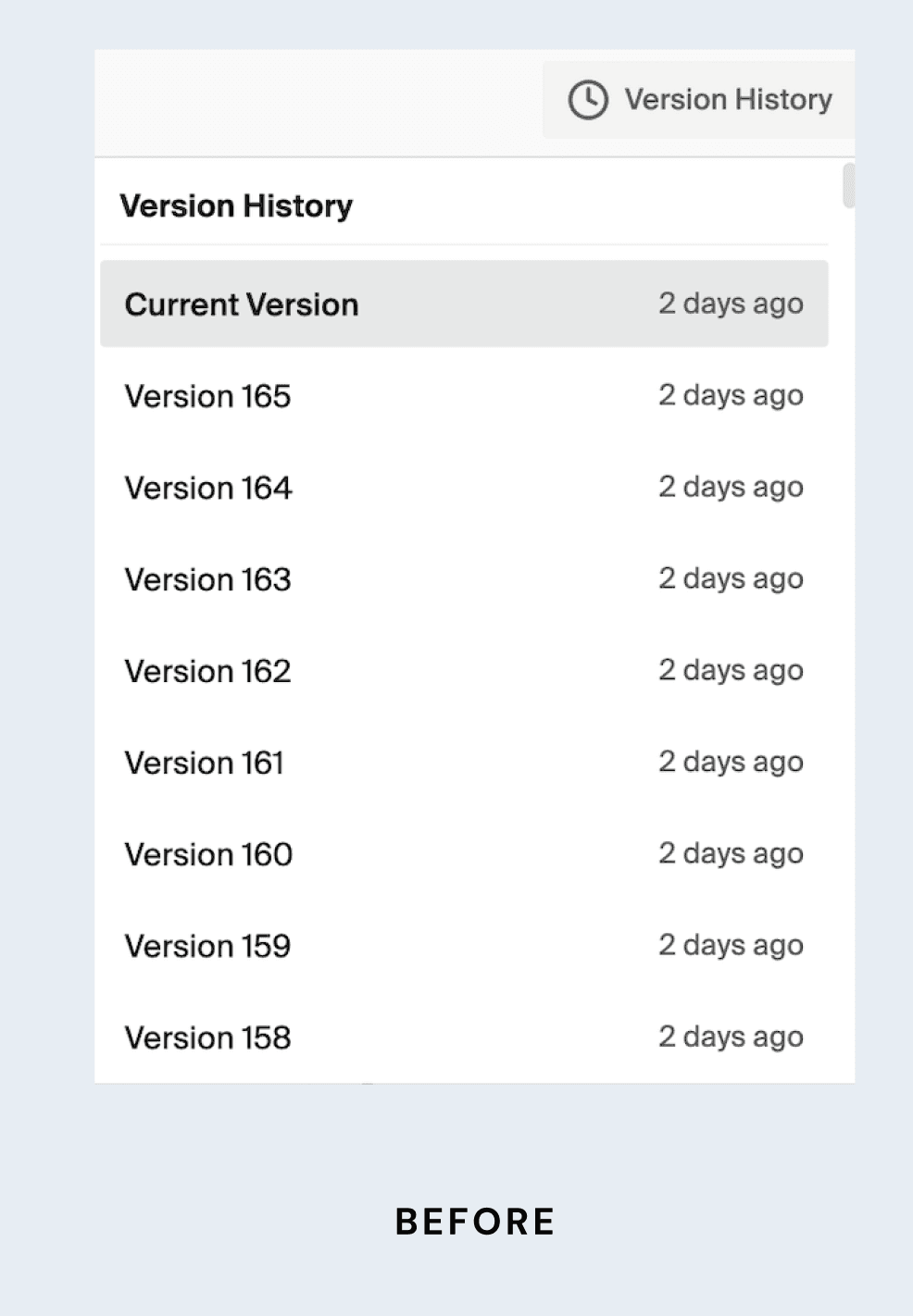
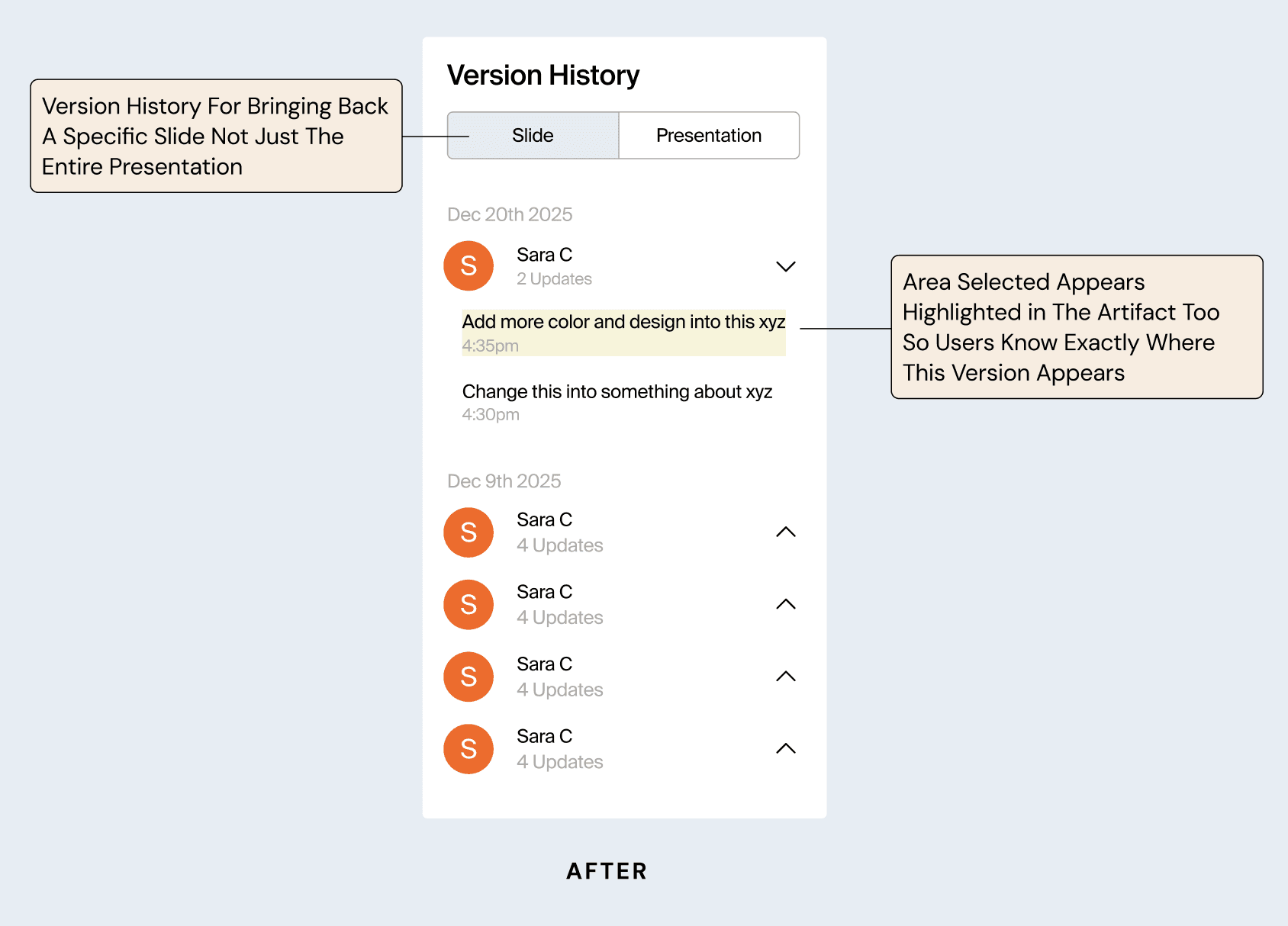
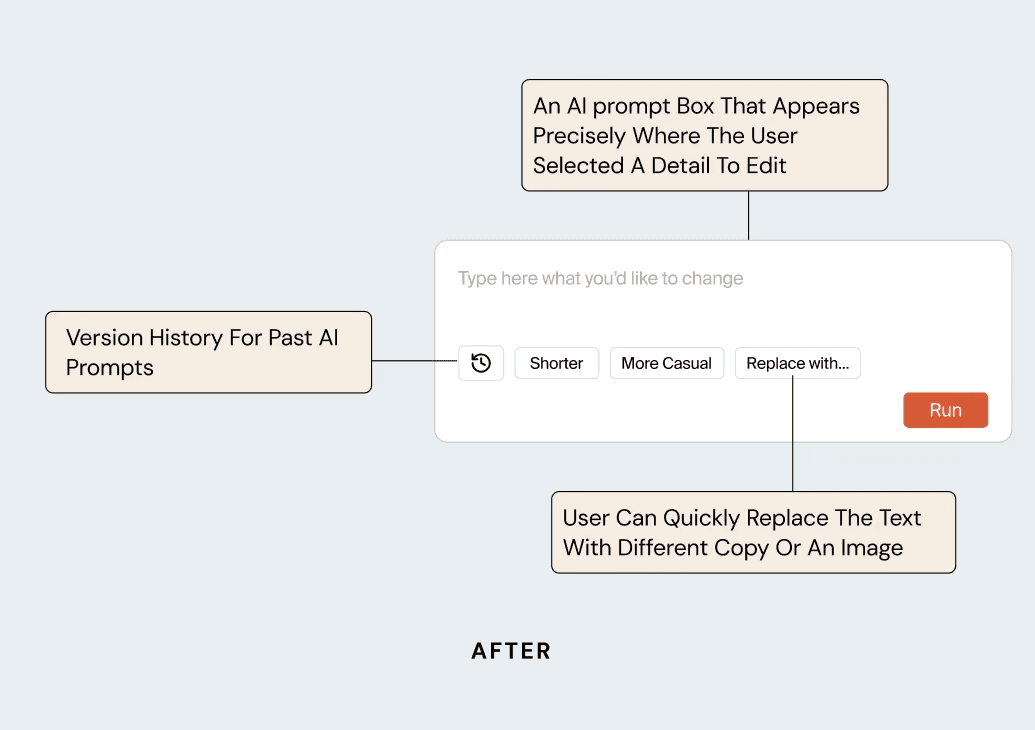
Granular Editing and Version History to Rebuild Trust
I redesigned two features to address the root cause of churn: granular editing and version history. Together, these features transformed the product from unpredictable and risky to reliable and forgiving. Preserving trust even when things went wrong.

IMPACT
Focus On B2B and let B2C go, For Now
While the designs are being implemented, Context.ai evaluated their go-to-market strategy and decided to focus resources on enterprise customers rather than continuing to serve both B2C and B2B segments. This was a business positioning decision informed by multiple factors, including the research insights about reliability expectations.
Startup companies that let go of B2C and focus exclusively on B2B often see customer acquisition costs drop by roughly 30–50% while improving customer‑lifetime‑value (LTV) ratios from below 1:1 to 3:1 or higher.
At the same time, former B2C users are no longer exposed to the financial strain, inconsistent access, or churn experience that the unprofitable B2C side created. Goodbye frustrations.
Most importantly, my work helped the team make an informed strategic decision grounded in user reality rather than assumption.
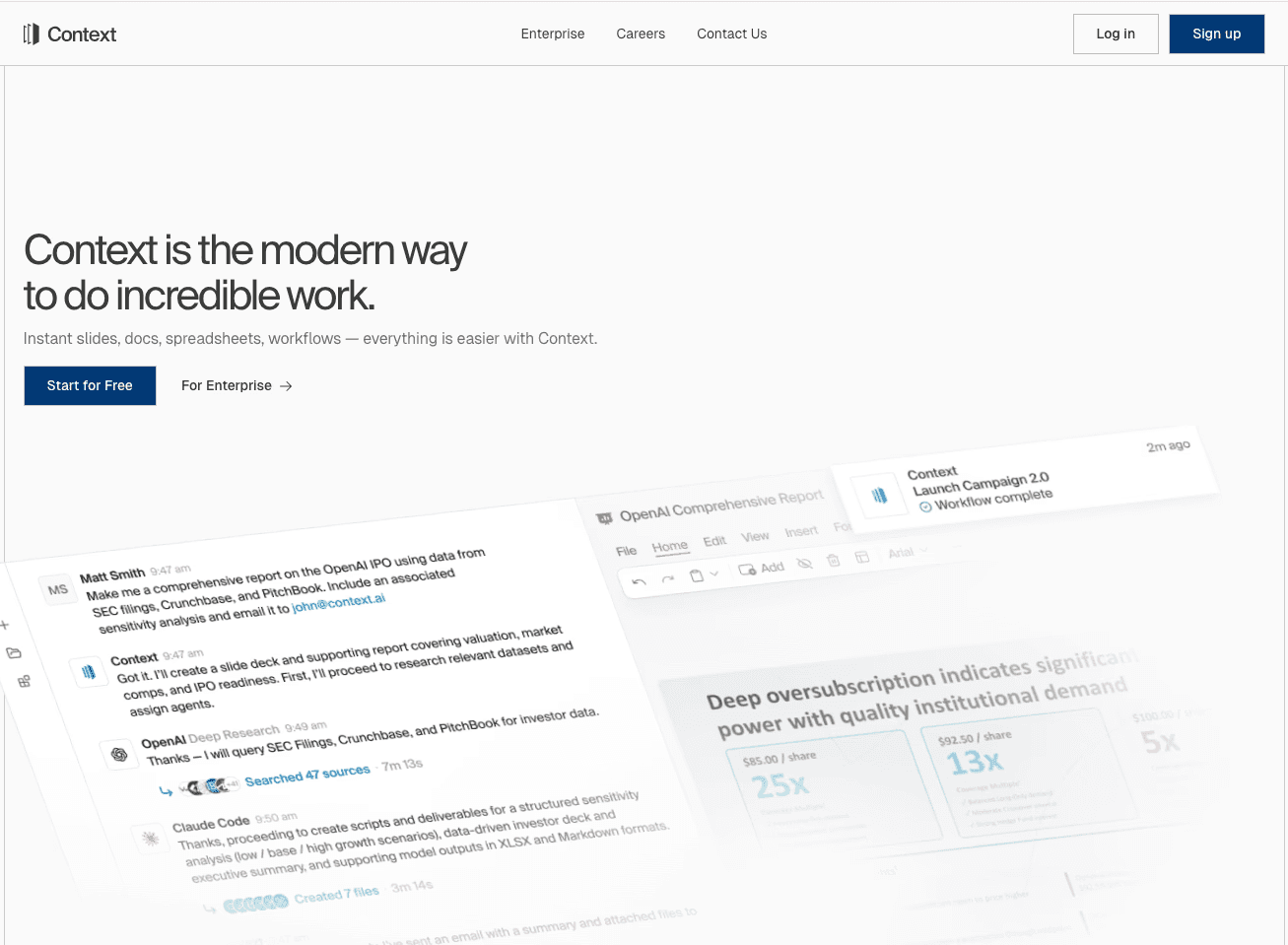
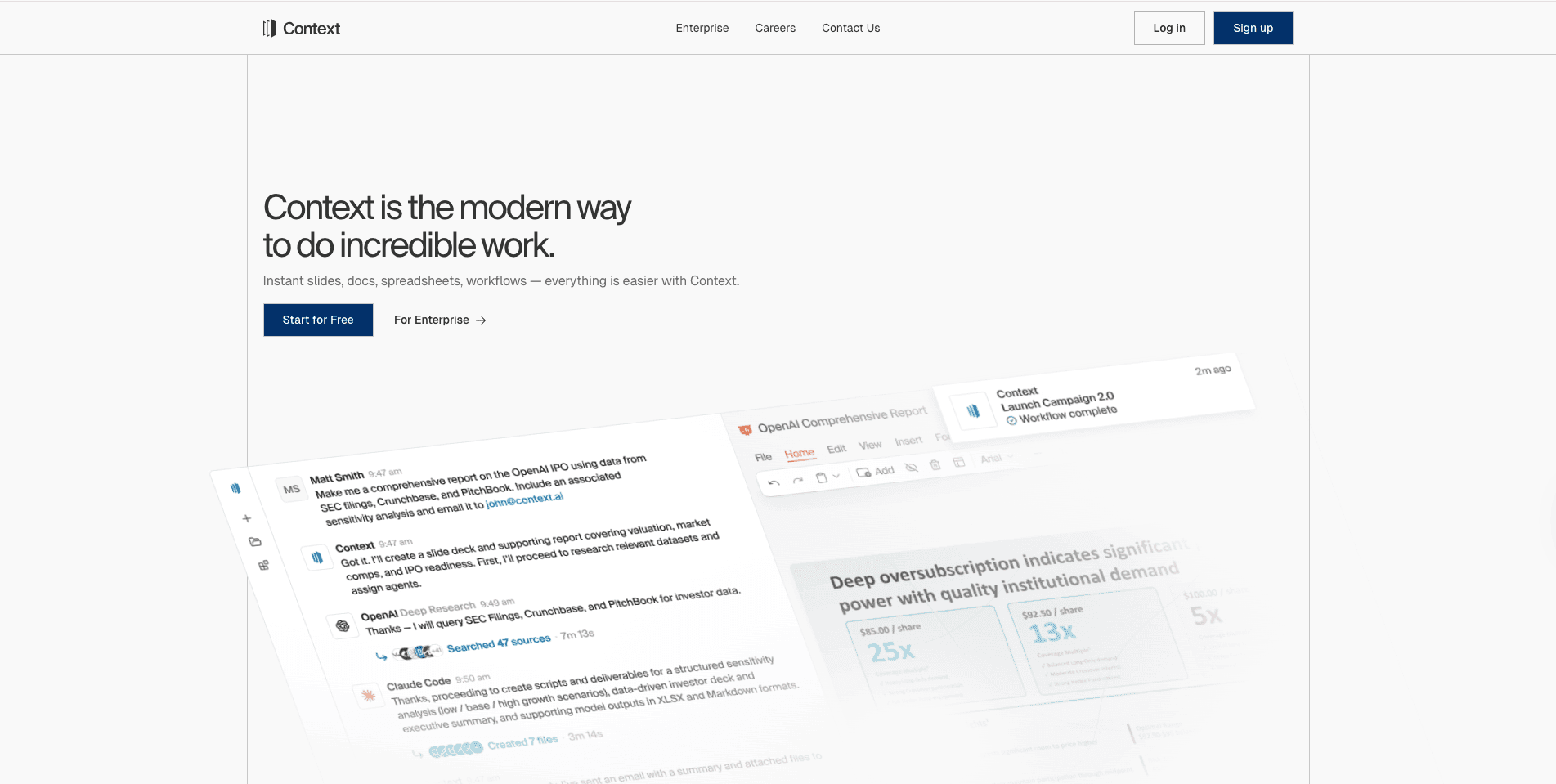
Before
B2C & B2B
After
B2B